Before you spend more
Ask these three questionsMost marketing that "isn't working" is not a budget problem, a channel problem, or a competition problem. It is a clarity problem. The visitor cannot tell — inside three seconds — what you do, who it is for, and what they should do next. They leave, and you blame the platform. This is a diagnostic framework for figuring out, before you spend another rupee, whether you have a marketing problem or a communication problem.
The trap of "more marketing"
When campaigns are not converting, the default reaction in most teams is to add: more ads, more platforms, more retargeting, more nurture emails, a new agency, a new dashboard. The implicit assumption is that the marketing is *not enough*. The much more common reality is that the marketing is fine — the message it is carrying is unclear, so more of it just means you are paying to confuse more people, faster.
We see this pattern almost every time a new client engagement starts with a brief that reads like "we need to scale paid spend" or "our SEO isn't working." Roughly seven times out of ten, the deeper problem turns out to be that the landing page, the ad copy, or the homepage cannot pass a 5-second test. The channels are fine. The destination is unclear.
The 5-second test
Before any audit, any analytics deep-dive, any agency review, run this test on your homepage and your top three landing pages. Show the page to five people who have never seen your business before. Give them five seconds. Take it away. Ask three questions:
- What does this business do?
- Who is it for?
- What should I do next if I'm interested?
If you cannot get three out of five people to answer all three correctly, you do not have a marketing problem. You have a clarity problem. No amount of paid budget will outrun it.
Why confusion loses customers faster than competition
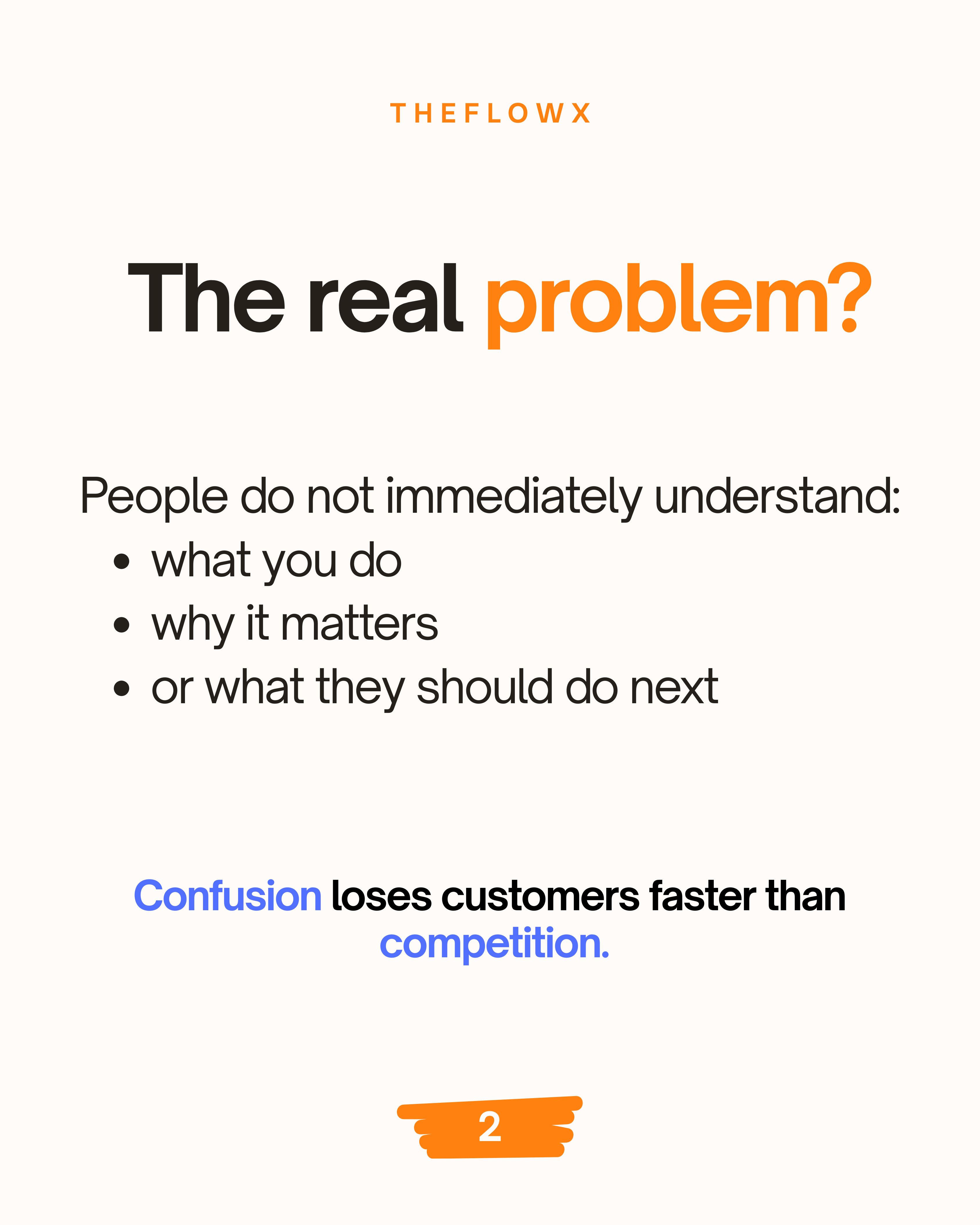
Visitors do not stay on a page they do not understand. They do not try harder. They do not scroll further looking for clues. They leave — usually back to the search results, where one of your competitors with a clearer message gets the click that should have been yours. The "competition" most marketers worry about is rarely the better-funded incumbent. It is usually the slightly clearer version of you.
The cost is invisible because nobody fills in a form to tell you they bounced. You see the bounce rate, you see the cost per acquisition climbing, and you assume the audience is wrong or the channel is dying. The audience is fine. The channel is fine. The page lost them.
Simplicity scales. Cleverness does not.
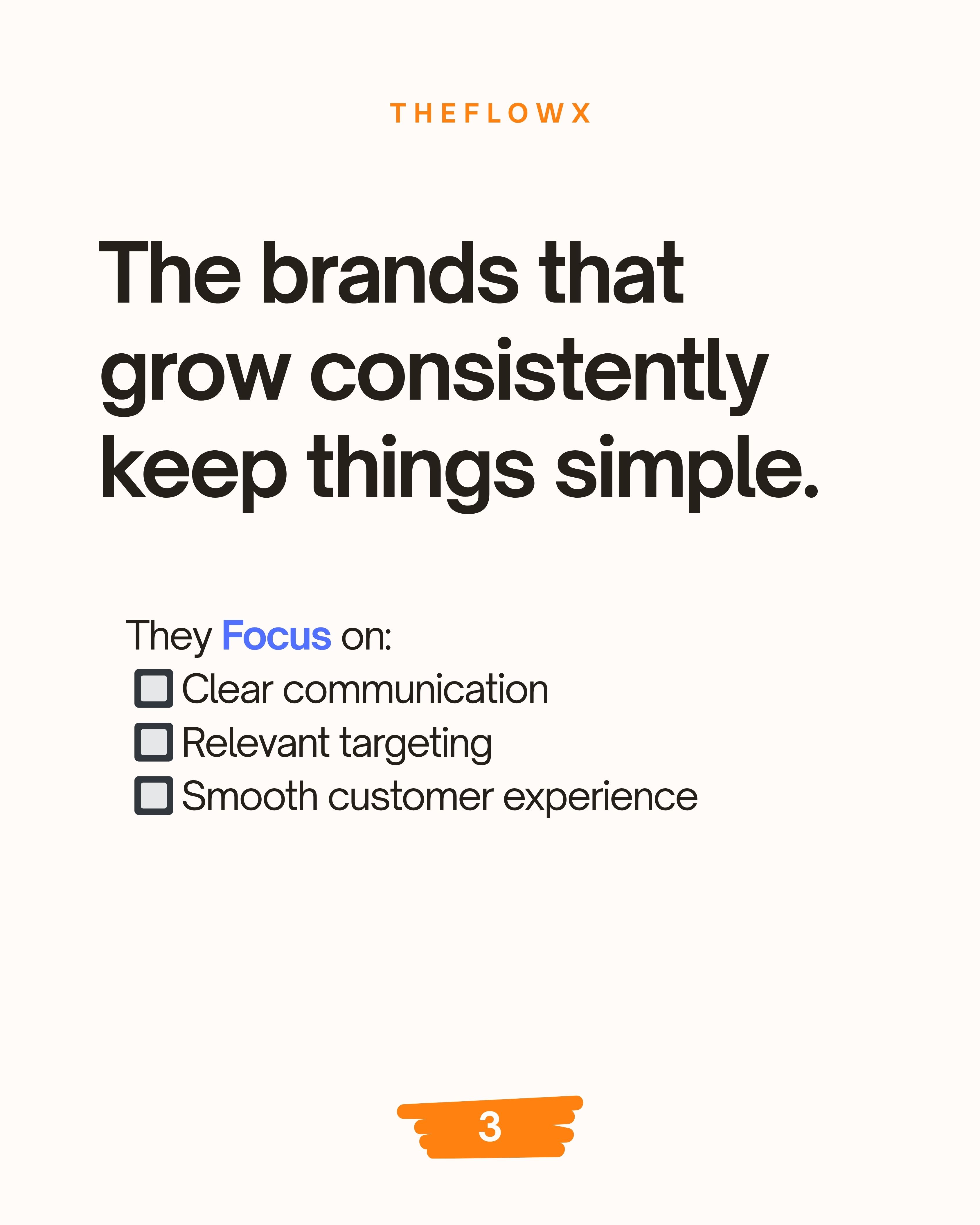
The brands that grow consistently — across markets, across categories — do not have the most clever copy or the most elaborate funnels. They have the clearest communication. Watch how the most successful direct-response businesses talk about themselves: they name the customer, name the outcome, name the next step, in language that a tired person on a phone at 9pm can understand on first pass.
Cleverness, metaphor, and brand-voice flourish all have a place. That place is after a visitor already understands what you do. Lead with clarity. Reward attention with personality.
The three-question diagnostic
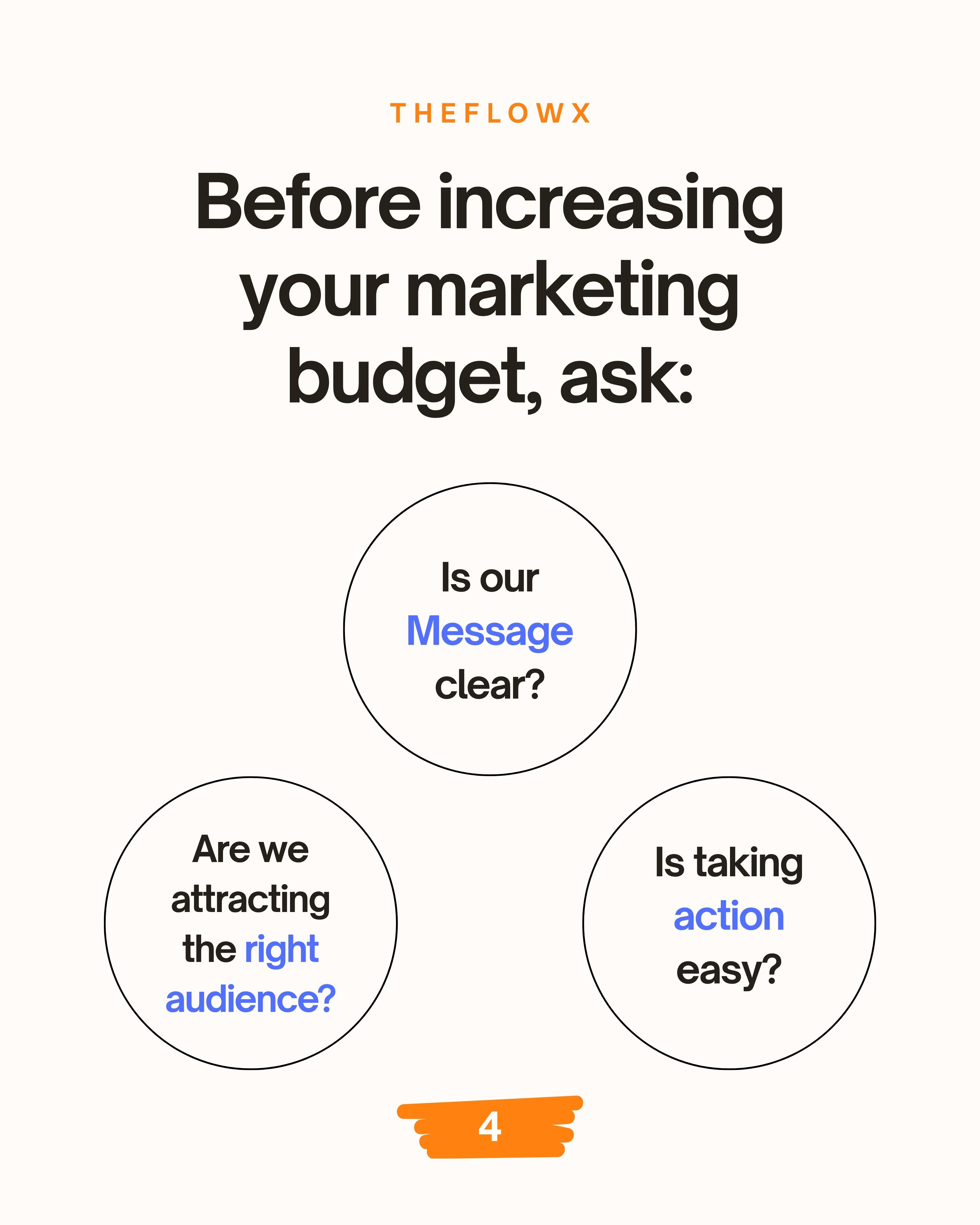
Before you increase the marketing budget on a campaign or channel that is not converting, walk through these three questions in order. Most teams skip straight to the third.
1. Is the message clear?
Read your homepage hero out loud to someone outside your industry. If they have a follow-up question before they can describe what you do, the message is not clear. Specifics to check:
- Does the H1 name what the visitor gets, not what you are proud of?
- Are there industry words a non-specialist would not recognise? (Highlight them. Replace them.)
- Does the page describe the customer's situation before describing your solution?
2. Is the audience right?
A clear message to the wrong audience converts at near zero. Before assuming the message is broken, check that the traffic you are sending to it is the traffic you would want a sales person to call back. Specifics to check:
- Are paid keywords filtered for buying intent, or are you bidding on curiosity?
- Does the ad copy or social hook self-select the right kind of person? Or is it inviting anyone who is mildly interested?
- Is the audience definition based on who already converts well, or is it inherited from an old brief?
3. Is the action easy?
The right person reading the right message will still leave if the next step is unclear, slow, or scary. Specifics to check:
- Is there one primary call to action above the fold, or three competing ones?
- Does the form ask for fewer fields than you think you need? (You almost always need fewer.)
- If the next step is a phone call or a demo, is the friction genuinely low — or is there a 14-field form between intent and action?
What this looks like in practice
A B2B SaaS client came to us last year saying their LinkedIn ads were broken. CPL had climbed 40% in three months and the sales team was complaining about lead quality. They wanted a new agency to "fix the channel."
The first thing we did was the 5-second test on their landing page. Five out of five testers could not tell what the product did within five seconds. The page led with a value statement — "Transform your operations with intelligent workflow orchestration" — that meant nothing to a person who did not already know the category. The ads were fine. The targeting was fine. The page lost everybody.
We rewrote the H1 to "Stop chasing field teams for paperwork. We close the loop automatically." Specific customer, specific pain, specific outcome. Zero other changes. CPL dropped 31% inside a month. The channel was never broken.
How to fix it without rewriting the whole site
You do not need a six-month rebrand. Most communication clarity fixes are surgical and they compound fast.
- Rewrite the H1 on your top three pages using a customer-noun + outcome-verb structure. Test against the 5-second test. Ship.
- Reduce CTAs to one primary action per page. Move secondary actions to text links. Watch what happens to the primary conversion rate.
- Cut one form field per week from any form that asks for more than four fields. Stop when conversion stops improving.
- Read every page out loud. If you stumble, your visitor will too. Edit the sentence that made you stumble.
- Show the page to five non-customers before shipping any major change. Five is a small number that catches a surprising amount.
Clarity is the ultimate conversion tool
More marketing does not fix unclear communication. Better clarity does. Before increasing the budget on a campaign that is not converting, ask whether the page that budget is buying traffic to can pass a 5-second test on its own. Most cannot. The teams that fix that part first usually find they did not need the extra budget at all.
If someone landed on your homepage today, would they understand your business in five seconds? Would they know exactly how you can help them and what to do next? If you are not sure, that is the right place to start — not the channel, not the budget, not the agency. The page.
Real work. Clear principles. Outcomes vary by category, market, and execution.