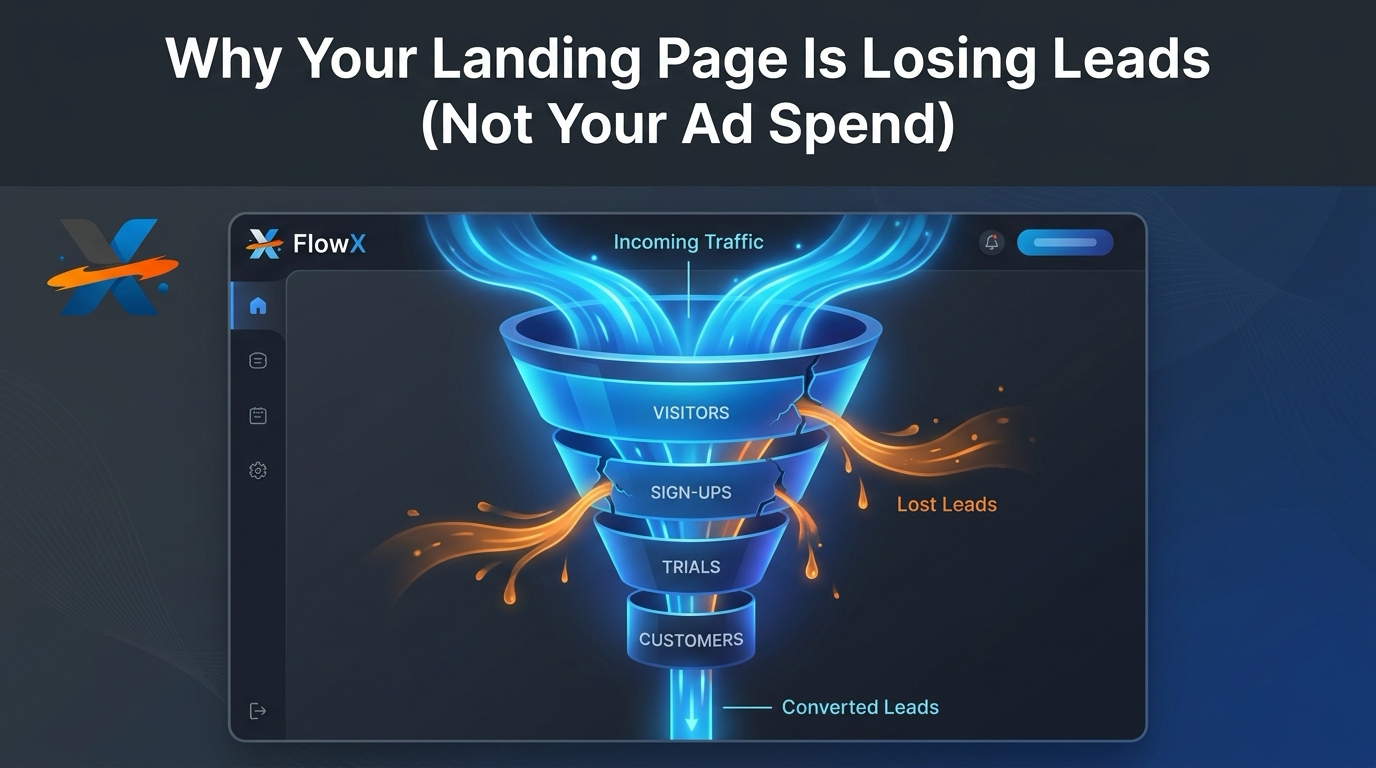
If your cost per lead keeps climbing even after you raise the budget or tighten your targeting, the bottleneck is usually what happens after the click, not the ad itself. A landing page that doesn't match the ad's promise, asks for too much too soon, or gives people more than one thing to do will waste good traffic no matter how well-targeted it is.
Three landing page problems that masquerade as ad problems
- Message mismatch. The ad promises one thing; the headline on the page says something else. Anyone who clicks expecting A and lands on B leaves within seconds. It shows up in your data as "bad traffic," when the traffic was right all along.
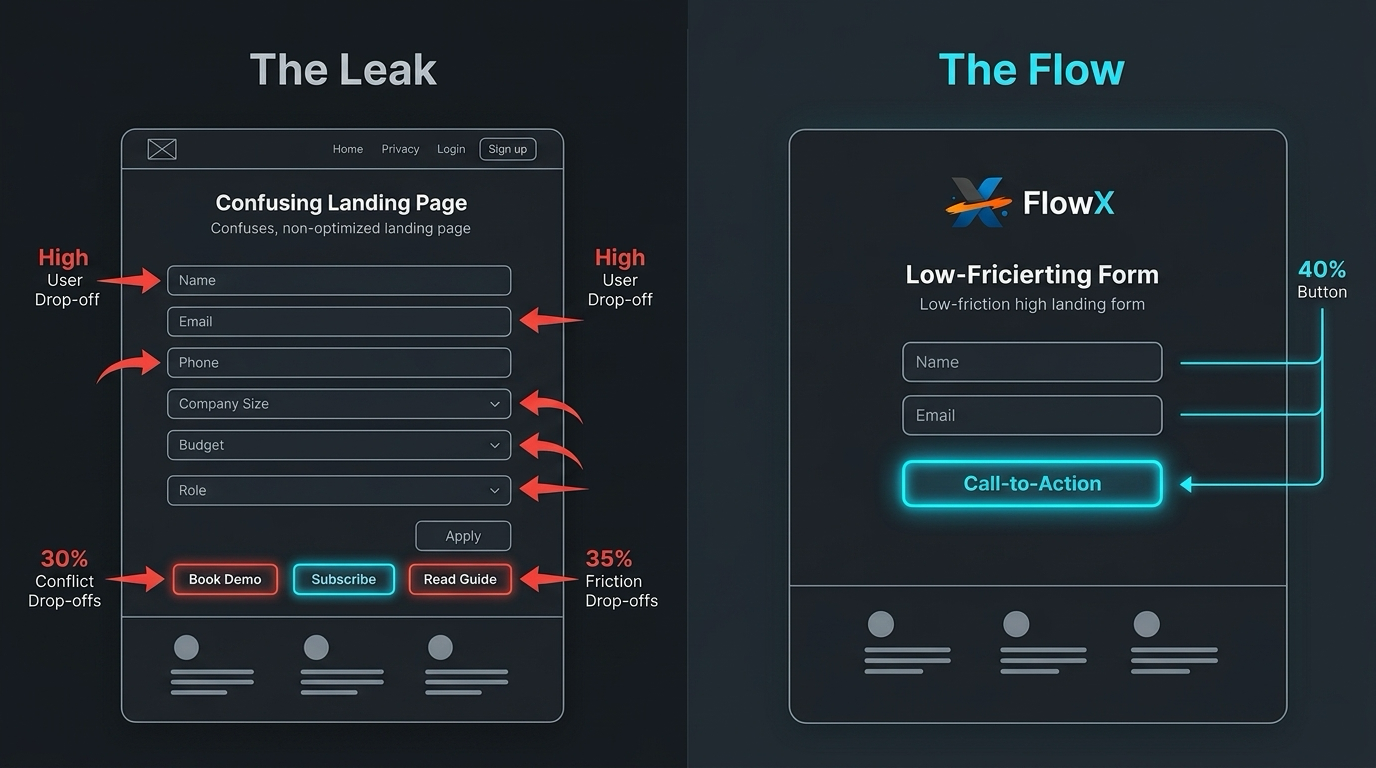
- Too much friction before the yes. Every extra form field is a reason to leave. If you're asking for a phone number, company size, and a budget range before someone has even decided you're relevant, you're filtering out real leads along with the noise.
- No single next action. A page with three competing CTAs (book a call, download a guide, sign up for a newsletter) makes people do nothing. One page, one action.
How to check which one you have: a 20-minute audit
- Put your ad headline and your landing page headline side by side. Do they say the same thing, in the same words a reader would use?
- Count the form fields. If it's more than 4 for a first touch, that's a likely leak.
- Count the calls to action on the page. More than one competing for attention is a leak, not a feature.
- Load the page on a phone, on mobile data, not office wifi. Slow or broken mobile experience quietly kills a large share of clicks before anyone reads a word.
What fixing it looks like
This is the same order we run for every client, regardless of channel: diagnose what's broken before changing anything, fix the message and the page, then improve based on real data, not guesses. It's why "bring in the right people" and "make it easy to act" are treated as two separate problems, not one. Better targeting without a page that converts produces more qualified people who still leave.
One healthcare clinic client saw organic leads rise 186% from exactly this kind of page and message cleanup, with no increase in budget.
FAQ
How do I know if it's my ad or my landing page?
Check click-through rate and cost-per-click in the ad platform first. If those are healthy but your on-page conversion rate is low or leads are consistently low-quality, the page, not the ad, is the more likely fix.
What's a good landing page conversion rate?
It varies by industry and offer, so treat any single number as a rough benchmark rather than a target. What matters more is the trend: if conversion rate is flat or falling while traffic quality stays the same, something on the page changed or was never right.
Do I need a completely new page, or can I fix the existing one?
Most of the time, fixing it. A message mismatch, a form that's too long, or too many competing CTAs are targeted fixes, not full rebuilds, and they're faster to test.
How long does it take to see a difference after fixing a landing page?
Message and form changes can show up in conversion data within days once you have enough traffic to be confident in the numbers. A full diagnose-to-deploy cycle, done properly, runs about 90 days.
Does this apply if my traffic is organic or SEO, not paid ads?
Yes. The diagnosis changes (you're checking search intent match instead of ad-to-page match), but the underlying problem is the same: traffic arrives, the page doesn't hold up its end, and the lead is lost regardless of how that traffic got there.
Real work. Clear principles. Outcomes vary by category, market, and execution.